


Stationary-engine Powered Targets
Lydd Ranges, west of Hythe and south of Ashford in Kent are situated on the reclaimed land of the historic Romney Marsh and part of the foreland at Dungeness.
The Lydd Camp Railway was a two foot gauge line that provided access to all parts of Lydd Army Camp. In 1936, the Tank Corps moved to the West Country and the War Office gave the ranges over to the Royal Air Force as a bombing range.
In 1937 the first Anti-Tank (gun) firing range (in the UK) was established at Lydd.
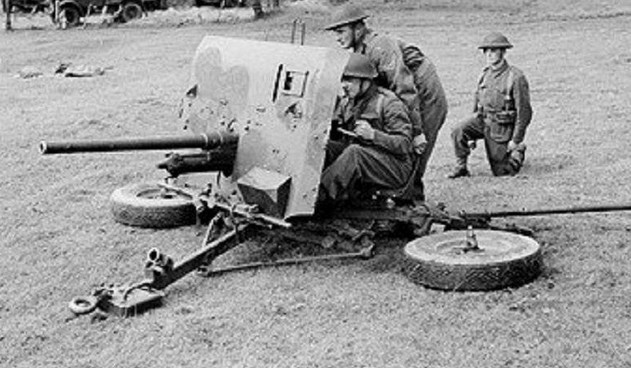 2-pound British Anti-Tank gun circa 1939 - Bill Hyde collection (copyright unknown)
At first, the targets at which the guns fired were pulled across the shingle on metal sledges, towed by two 3-ton lorries.
Mr. Percival, an engineer, was asked to head a team to produce a more permanent range and initially, two lengths of rail were laid. An engine was installed in a building to tow the targets, which were linked at about 10ft intervals with steel bars and towed back and forth.
 Lydd Ranges Stationary Engine to move sled targets - A. Coward collection
 Lydd Ranges Stationary Engine Control Panel - A. Coward collection
 Lydd Ranges. 1939 anti-tank gun cable hauled target sleds and power house - A. Coward collection
 Three cable hauled trolleys with mounted targets - A. Coward collection
Eventually the line was extended and soon boasted of over twenty miles of track.